

Tips for getting through the long winter evenings
I've seen this listicle everywhere, but this is the MY LIFE IN THE PAST version
Our longest, darkest nights are upon us here in England, and chez Worsley we’ve just shelled out for a Netflix subscription.
But just imagine the winter evenings before the internet or even electric light.
No need to panic!
Around the open fires of homes throughout history there existed a lost slice of life: DIY family entertainment, or the parlour game.
Henry VIII’s courtiers liked blindfolding and chasing one another about in ‘Blindman’s Buff’ – a ‘buff’ is a shove – and they also filled their empty hours with gambling games.
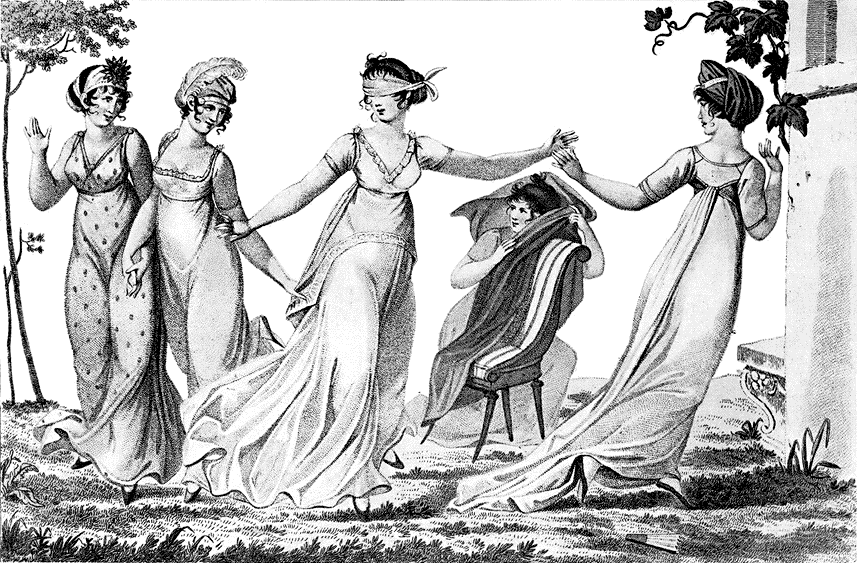
Francis Willughby’s Book of Games from the late 1600s describes the rules of backgammon, and gives instructions for card games that begin with the very manufacture of the cards themselves:
‘take three or four pieces of white paper, pasted together and made very smooth that they may easily slip from one another, and be dealt and played.’
But enjoyment wasn’t the top priority in the grandest, most hierarchical Tudor or Stuart homes. There, the most important person in a room would sit in solitary splendour in the best chair, while everyone else stood and watched and admired them.
In the Georgian age, aristocrats started to get bored with these stiff rituals. One character in an eighteenth-century novel complains that some posh ladies ‘sitting in a formal circle’ are far too intimidating to talk to, and she has to sit there ‘like a bird that dare not move so much as its head or its eyes.’
This sort of thing led to a controversial new informality entering upper-class life, like the racy theatrical performance that young people put on together in Jane Austen’s Mansfield Park.
You might be surprised to learn just how much kissing went on in Victorian parlour games.
