

Tudor Christmas
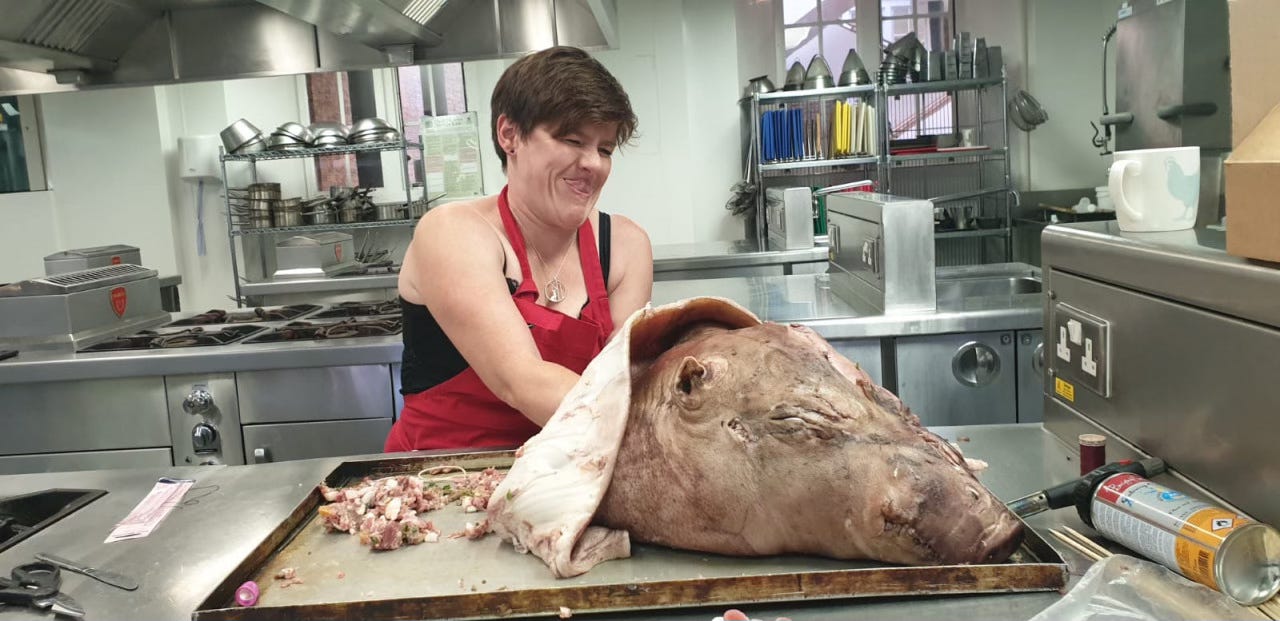
Have yourself a merry little boar's head
The other day I found myself at a very upmarket carol service.
One of the lessons was read by Benedict Cumberbatch.
And another by, erm, me.
Afterwards the choristers all gathered round me, wanting my autograph. I was gratified, but confused about why they were asking me rather than the A-list Hollywood actor. Turned out the day before, in school, their history teacher had made them watch my programme A Merry Tudor Christmas.
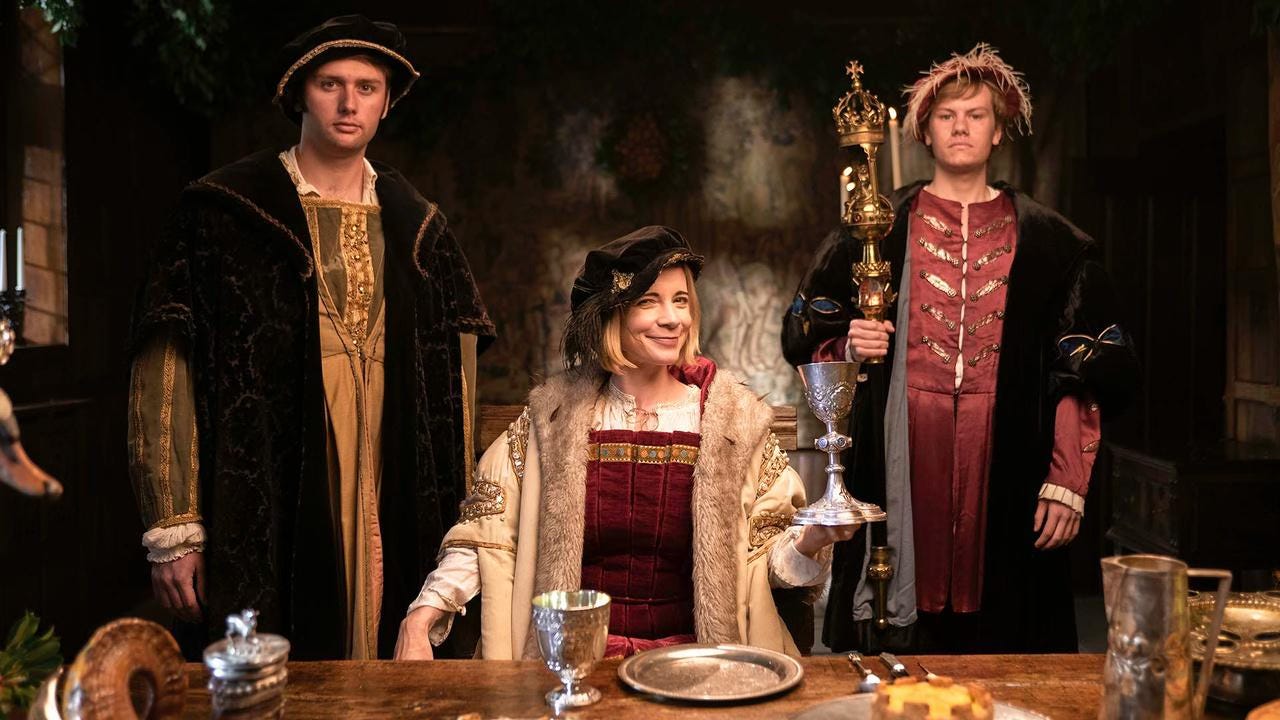
When the BBC first challenged me and a group of pals - including fabulous food historian Annie Gray - to re-stage a Tudor Christmas, my first thought was ‘this will be difficult’.
Anyone with even an inkling about the history of Christmas will know that the Victorians ‘invented’ the festival as we know it today. Christmas trees, crackers, cards: all appeared in the consumerist society Britain became after the Industrial Revolution.
But of course the Tudors still celebrated the birth of Christ. Our research revealed the ways they went about it were both reassuringly familiar, but also deeply strange.
For a start, the Tudors did the feasting and the fasting the other way round.
Advent, to them, wasn’t a time for eating chocolates out of calendars. Instead it was a period of abstinence - no meat, no dairy - in preparation for a religious festival which only began on 25 December.
Today society expects us to binge throughout December, and by January it’s time for healthy eating and the gym. But when we go back to work, the Tudors would still have been enjoying a holiday which lasted twelve days, culminating in the biggest party of all on 6th January.
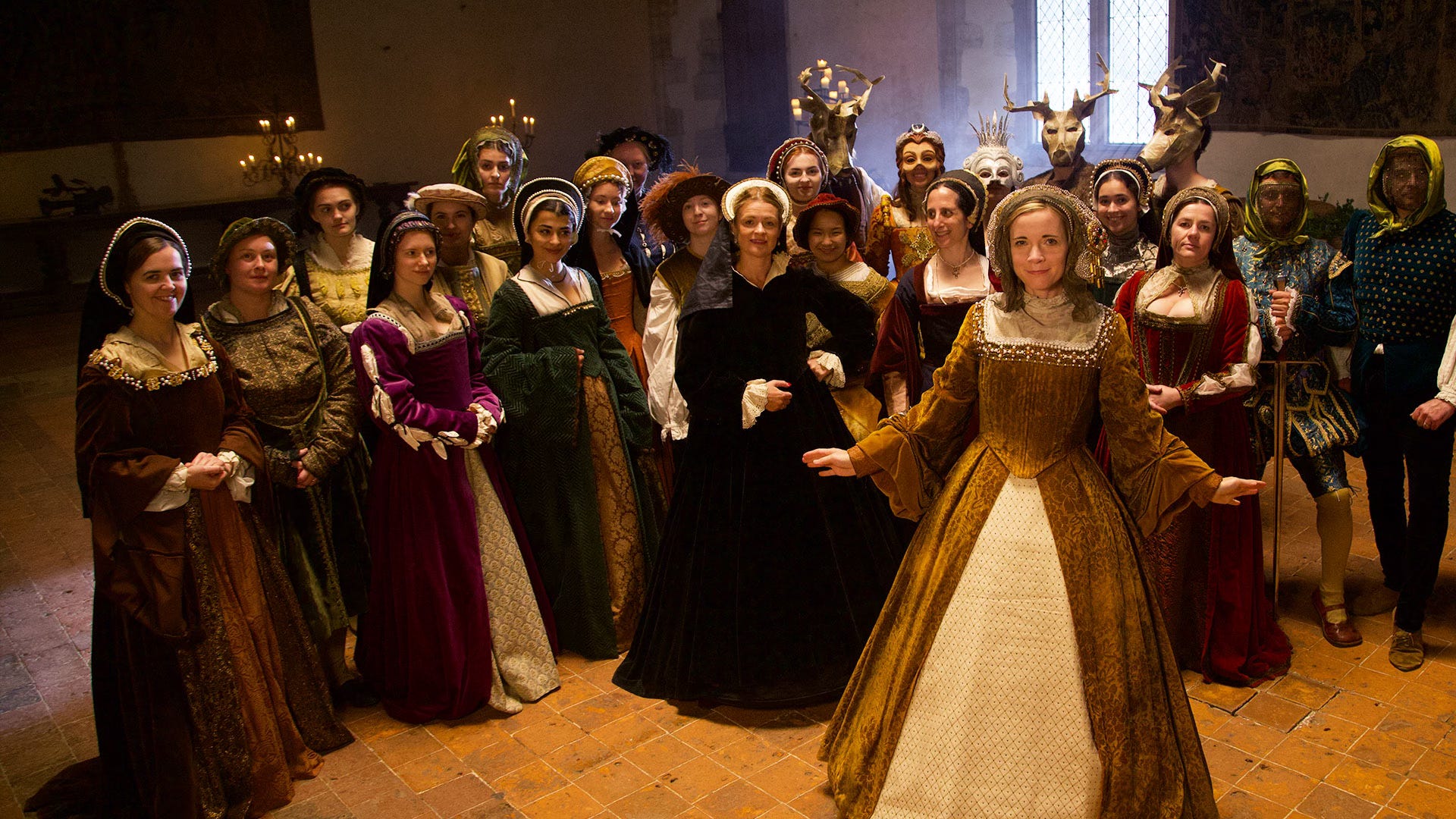
But Tudor parties did foreshadow many familiar things.
For a start: what’s the smell of Christmas? It’s surely the scent of spices, from mulled wine, Christmas cake, scented candles. And for rich Tudors too, the food at their feasts would have included valuable spices – cloves, mace, pepper – imported from all round the globe.
There’s a big difference when it came to mince pies, though.
Tudor ones weren’t sugary little things. Theirs were massive, and made out of actual minced meat sweetened with dried fruit. A ‘mince’ pie gets its name from ‘mincing’ or chopping the ingredients into tiny bits. Over the last five hundred years, the pies themselves have shrunk and the meat has disappeared, although an echo of its presence just about lingers on in the form of the suet that makes still some of today’s mince pies non-vegetarian.
What about decorations? Long before the Tudors, the early Christians took over and repurposed the earlier pagan celebration of midwinter.
December, when the weather prevented people from doing farmwork or fighting wars, seemed as good time as any to pick to celebrate the birth of Jesus.
So the Tudors still maintained some ancient pre-Christian traditions such as bringing greenery into the house to give a sense of renewal.
Tudor housewives decorated their spinning wheels by anchoring the wheels to the frames with long stems of ivy to prevent any spinning from being done until the holiday was over.
And where do presents fit in? You might well keep a list of all people you send cards to. Henry VIII did something similar for gifts, although he gave his presents on New Year’s Day.
In the National Archives documents still survive recording what Henry gave to his family, nobles and courtiers – mainly costly objects like goblets made out of gold and silver – and what he received in return.
The list for 1532 is particularly interesting because there’s just an empty space for the gift Henry VIII gave to ‘the queen’.
That’s because Anne Boleyn was now on the scene, so poor Catherine of Aragon - who was, after all, still queen - didn’t get anything from her husband that year.
These gifts were exchanged in a very formal ceremony on 1st January, but Tudor courtiers let their hair down at their Twelfth Night masques and balls. Henry VIII loved to dress up in a disguise as a cover for misbehaviour.
Something of that survives in the form of the office Christmas party today, when the people who seem quiet and well-behaved all year appear in surprisingly sparkly dresses, drink too much, and photocopy their bums.
At a Tudor court Christmas the normal social order got turned upside-down, and there was a kind of organised chaos overseen by a special employee called The Lord of Misrule. He was sometimes referred to as ‘Lord Christmas’, which makes historians think that he might have been the forerunner of our modern Father Christmas.
But the most significant Tudor thing that’s missing from many people’s Christmases today is probably religion. After all, the ‘twelve days’ represented saints’ feast days in the religious calendar.
And here perhaps the Tudors perhaps took a more spiritually healthy approach than we do. To them religion was so much a part of life that popping into church for a bit of mind-cleansing reflection and meditation was second nature.
In the midst of Tudor life, death was close at hand, whether through famine, disease or war, and I think this brought a sense of perspective and of gratitude that can be lacking from our modern orgy-of-shopping.
It’s been a joy and privilege to pop into your inbox this year, dear readers.
I send you all my very best (Tudor) Christmas wishes!
Thank you Lucy, as ever so enjoyed your Post and the little extra 'snippetts' you always include. Love too the pic of Annie wrestling with the Boar's head.
My Very Best Wishes to You and for All Yours for a Very Happy, Peaceful (ie problem-free) Xmas with perhaps then a more 'Rowdy' ? New Year celebration: chocs and cocktails followed by a super 2026 of happiness, good health and more great success.
There's nothing like a massive boar's head to know it's Christmastime! Merry Christmas everyone!